How to choose outsourced accounting services for your business
By the AceCPAs team

On this page
Short answer
Choose outsourced accounting services by checking scope, CPA review, close deadlines and handoffs. Use this checklist to compare teams before you sign.
Choose outsourced accounting services by matching the provider’s written scope to your accounting workload, checking who prepares and reviews the books, and agreeing on close deadlines before you sign. For your 2026 evaluation, also confirm what your employees must supply, which work falls outside the engagement, and how you recover your records when the relationship ends.
TL;DR
- Choose outsourced accounting services by deliverables, review responsibility and close deadlines—not a service label.
- ACE CPAs serves US businesses with $1M–$50M revenue seeking outsourced bookkeeping, controller and CFO support.
- Separate bookkeeping, controller oversight and CFO planning before comparing proposals.
- Require a written handoff plan covering records, access, unresolved items and your responsibilities.
Why this matters
An accounting proposal can describe a service without defining a finished deliverable. Monthly reporting, for example, leaves unanswered questions about reconciliations, adjustments, review and delivery.
Your buying decision should resolve those questions before work starts. ACE CPAs provides outsourced accounting services for US businesses with $1M–$50M revenue; evaluating providers at that business size requires separating transaction processing from accounting oversight and financial planning. See the bookkeeping and accounting scope as a concrete example of deliverables to compare.
Buy a defined accounting process, not an undefined promise to handle the books. Your team still needs to approve transactions, supply supporting records and make business decisions.
How do you choose outsourced accounting services for your business?
Choose outsourced accounting services through a written comparison of scope, ownership, review, timing and handoff. Use the same requirements for every proposal so a narrower engagement does not appear equivalent to a broader one.
1. Define the work
List the tasks your business needs before asking providers to describe their packages. Include bank reconciliations, credit card reconciliations, receivables, payables, payroll entries, balance sheet schedules and monthly financial statements where relevant.
Separate recurring work from catch-up work. Correcting historical balances is a different assignment from maintaining clean records after the current month closes.
For each task, write down:
- The source document or system.
- The person supplying the information.
- The person preparing the accounting.
- The person reviewing the result.
- The finished report, reconciliation or schedule.
2. Assign ownership
Ask who owns each task on both sides of the engagement. A provider recording bills does not necessarily approve those bills or authorize payment.
Keep transaction approval separate from transaction recording where practical. Identify who can change vendor payment details, release payments and resolve disputed transactions; do not leave those responsibilities inside a general bookkeeping description.
3. Confirm review
Ask what CPA review covers and how questions are resolved before reports reach you. A useful answer names the reviewer’s responsibility, the records examined and the process for correcting errors.
Do not treat CPA review as an audit opinion. Ask the provider to distinguish its monthly accounting review from any separately contracted assurance engagement.
4. Set deadlines
Put your 2026 close calendar in writing. Specify when your team must supply records, when the provider raises missing-item questions, and when you receive completed financial statements.
A delivery date needs a dependency list. Ask what happens when a bank statement arrives late, an inventory count remains unresolved or payroll information changes after preparation.
5. Plan handoff
Confirm who controls the accounting subscription, administrator access and underlying records. Document how you receive reconciliations, schedules, transaction support and unresolved questions when the engagement ends.
An exit plan is part of a sound purchase. It makes the division between your business records and the provider’s working process explicit before either side needs it.
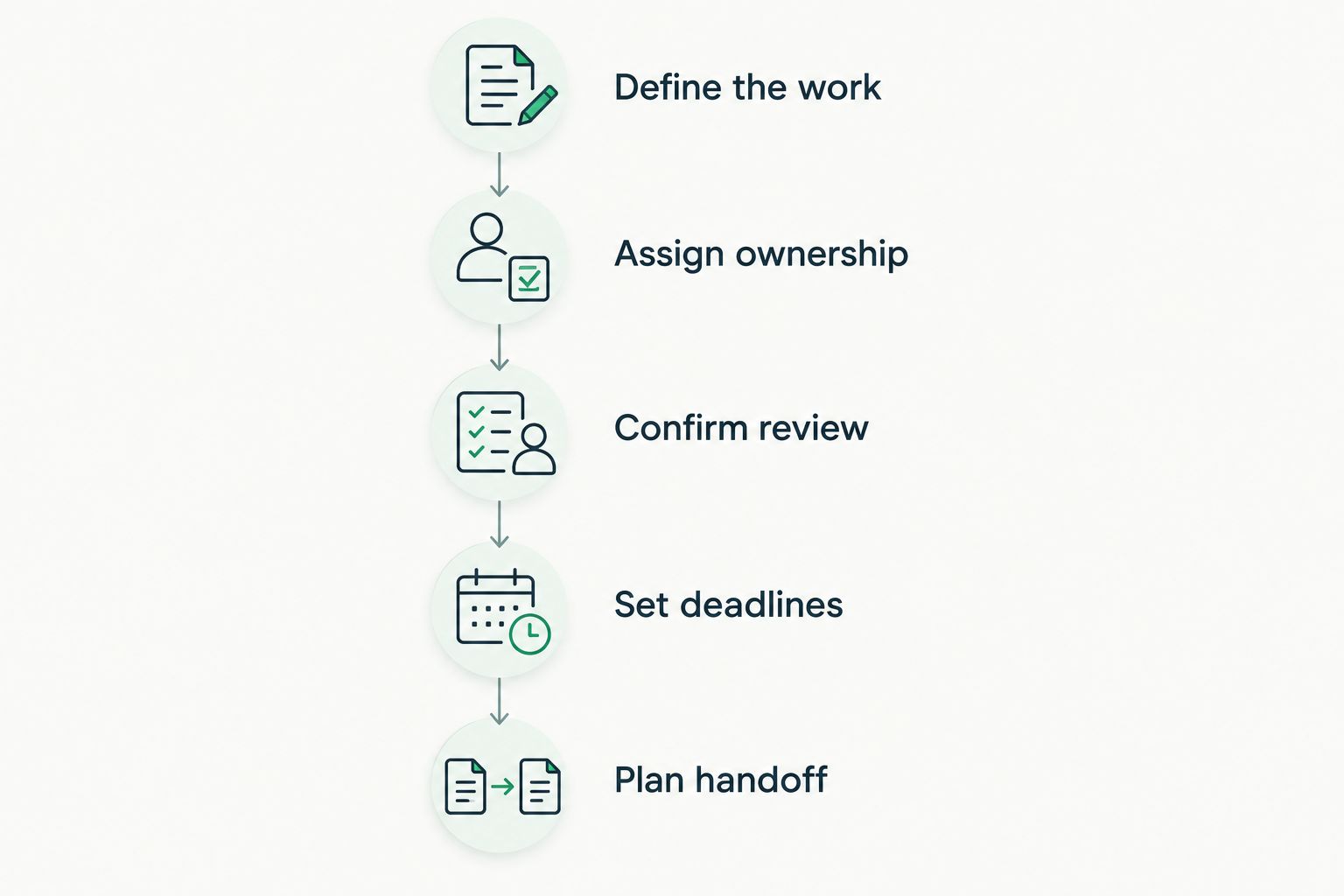
Agree on responsibilities and review before committing to a delivery calendar.
Which accounting service fits your business?
Bookkeeping, controller support and CFO support solve different problems. Start with the problem you need resolved, then check the engagement scope rather than assuming every provider uses these labels identically.
Bookkeeping
- Best for: Keeping transactions and balances current
- Deliverables to request: Reconciliations, transaction coding, receivables and payables records
- Limit to address: Does not automatically include accounting policy decisions or forecasting
Controller support
- Best for: Managing the close and accounting quality
- Deliverables to request: Close checklist, balance sheet review, adjusting entries and reporting oversight
- Limit to address: Does not automatically include strategic financial planning
CFO support
- Best for: Connecting financial information to decisions
- Deliverables to request: Cash forecasts, budgets, scenario analysis and management reporting
- Limit to address: Depends on reliable underlying accounting
Tax services
- Best for: Addressing tax preparation and planning needs
- Deliverables to request: A written list of entities, filings and advisory responsibilities
- Limit to address: Does not automatically include recurring bookkeeping
Quality of earnings services
- Best for: Examining earnings in a transaction context
- Deliverables to request: A defined analysis scope and transaction-specific reporting
- Limit to address: Does not replace an ongoing monthly close
These are scope categories, not a required bundle. Ask providers to mark each requested deliverable as included, excluded or separately scoped.
Bookkeeping: best for current, reconciled records
Choose bookkeeping support when transaction processing and reconciliations need a clear owner. Confirm whether the engagement includes maintaining supporting schedules or only recording activity.
The advantage is a defined operating routine. The limitation is that accurate transaction entry alone does not resolve every accounting treatment, reporting question or planning need.
Controller support: best for a controlled monthly close
Choose controller support when you need someone to own the close process, review balances and address accounting exceptions. Request a sample close checklist and an explanation of how open items reach management.
Controller oversight adds accountability to the reporting process. Its scope still needs boundaries: supervising the close is not the same assignment as building a financing plan or evaluating an acquisition.
CFO support: best for forward-looking decisions
Choose CFO support when your questions concern future cash, hiring capacity, budgets or alternative operating plans. Define the decision the forecast must support and the information needed to maintain it.
CFO support connects accounting to planning. It does not remove the need to reconcile accounts and correct unreliable opening balances first.
Why outsourced accounting scope varies
Your operating details determine the work. Use these factors to explain your requirements rather than comparing providers solely by company size.
- Transaction sources: Bank activity, payment processors, purchasing systems and payroll records create different reconciliation tasks.
- Reporting structure: Separate entities, departments, locations or projects require clear coding and reporting rules.
- Industry accounting: Job costing, inventory, revenue recognition and receivables adjustments require different supporting schedules.
- Starting condition: Unreconciled accounts and unsupported balances require cleanup before a dependable recurring process begins.
- Decision support: Historical statements, cash forecasts and transaction analysis are different deliverables with different responsibilities.
For your 2026 proposal comparison, send every provider the same summary of these factors. Ask each provider to identify assumptions and exclusions against that summary, rather than responding with a generic service description.
What should the provider understand about your industry?
Ask the provider to explain the accounting workflow using your actual source records. General familiarity is less useful than a clear explanation of how transactions become reconciled balances and management reports.
Use the following checklist to test the proposed scope. Not every item applies to every business; identify the relevant items before requesting a proposal.
Construction
- Accounting work to discuss: Job costing, work in progress, retainage and subcontractor records
- Practical question to ask: How will you connect job reports to the general ledger?
Healthcare
- Accounting work to discuss: Patient receivables, payer remittances and contractual adjustments
- Practical question to ask: How will you reconcile collections and adjustments to receivables?
Ecommerce
- Accounting work to discuss: Payment processor settlements, refunds, fees and inventory records
- Practical question to ask: How will you reconcile sales activity to net deposits?
SaaS
- Accounting work to discuss: Deferred revenue, subscription billing, MRR and ASC 606 where applicable
- Practical question to ask: How will you distinguish subscription metrics from recognized revenue?
Hypothetical example: An ecommerce owner asks a provider to record payment processor deposits as sales. A better scope first addresses gross sales, refunds, processor fees and unsettled balances, because the deposit alone does not explain those components.
The lesson is procedural: require the provider to explain the reconciliation, not merely name the industry. Apply that test to the accounting issue your business actually faces.
How do you compare accounting proposals fairly?
Compare proposals against a single requirements sheet. Mark every requirement as included, excluded or unclear, then resolve unclear items before selecting a provider.
For a 2026 engagement, request written answers to these questions:
- Which accounts will be reconciled, and who reviews them?
- Which financial statements and supporting schedules will you receive?
- Who owns cleanup, opening balances and unresolved historical issues?
- Who answers accounting questions, and who covers an absence?
- What information must your employees provide before the close?
- Which activities require a separate engagement?
ACE CPAs outsourced accounting services are best for US businesses with $1M–$50M revenue seeking CPA-reviewed books and a monthly close by the 15th. Its stated service commitments include a consistent team, CPA-reviewed books and monthly close by the 15th—not guaranteed financial or tax results.
The fit still depends on your scope. Those commitments do not, by themselves, establish which tax filings, forecasts or transaction analyses your engagement includes; confirm those deliverables separately.
What should you bring to an accounting consultation?
Bring your current financial statements, a list of accounting systems and a description of unresolved issues. Prepare questions about the reports you cannot currently trust or the decisions your reports do not support.
For your 2026 consultation, identify your current close timing, internal responsibilities and required reporting date. Explain whether you need recurring bookkeeping, controller ownership, CFO planning or a combination.
Use the contact page to discuss that scope. A focused consultation starts with the work you need owned, not a request to take over everything without defining it.
Discuss your accounting scope
Outline your reconciliations, reporting needs, close deadline and internal responsibilities.
What should happen before the first monthly close?
Before the first monthly close, agree on opening balances, access permissions, outstanding cleanup and document deadlines. Record who approves changes to prior periods and who resolves questions about unsupported balances.
Treat onboarding and recurring work as separate checklists. A provider cannot demonstrate a completed reconciliation merely by showing that transactions have been imported into accounting software.
Can you outsource accounting and keep financial control?
You can outsource accounting preparation while retaining approval authority and access to records. Define payment permissions, administrator access and escalation responsibilities in writing.
Review the reporting package and unresolved items with the provider. Outsourcing changes who performs the accounting work; it does not transfer management’s responsibility for business decisions.
FAQ
What's the best way to choose outsourced accounting services?
Choose outsourced accounting services by comparing written deliverables, review responsibility, close deadlines and handoff procedures. Give every provider the same requirements so exclusions remain visible.
Is outsourced bookkeeping the same as controller support?
Outsourced bookkeeping and controller support cover different responsibilities. Bookkeeping focuses on recording and reconciling activity, while controller support addresses close ownership, accounting review and reporting oversight; confirm the exact scope.
Do I need CFO support if my books are behind?
CFO support does not replace correcting overdue reconciliations and unsupported balances. Define the cleanup work first, then identify the forecasting or decision support you need.
What does CPA-reviewed bookkeeping mean?
CPA-reviewed bookkeeping means a CPA reviews the books within the provider’s stated process. Ask what that review covers; do not assume it constitutes a financial statement audit or a separately contracted assurance service.
What does ACE CPAs commit to for monthly accounting?
ACE CPAs states commitments to CPA-reviewed books, a consistent team and monthly close by the 15th. Confirm the deliverables, record-submission requirements and exclusions in your engagement.
What should an outsourced accounting agreement include?
An outsourced accounting agreement should identify tasks, deliverables, responsibilities, deadlines, access arrangements and exclusions. It should also explain how records and unresolved work transfer when the engagement ends.
Should tax services be included in monthly bookkeeping?
Tax services should be expressly included or excluded rather than assumed. Specify the entities, filings and advisory work covered by the agreement and distinguish them from recurring bookkeeping.
One last thing
Ask every finalist to describe what happens when a reconciliation does not balance. Request the escalation path, the person responsible and how the unresolved item appears in your reporting package.
A credible accounting process explains exceptions, not just routine delivery. That answer helps you evaluate ownership before signing, when responsibilities are still easy to clarify.
Related guides

How to compare fractional CFO services proposals
Compare fractional CFO services proposals by deliverables, staffing, forecasting, and handoffs. Use a practical checklist to choose the right scope.
How to choose outsourced accounting services for your business
Choose outsourced accounting services by checking scope, CPA review, close deadlines and handoffs. Use this checklist to compare teams before you sign.

How to scope outsourced controller services before signing
Scope outsourced controller services before signing. Define deliverables, close deadlines, review duties, exclusions, and approvals with a practical checklist.

How to switch outsourced bookkeeping services without losing records
Switch outsourced bookkeeping services without losing records. Use a clear handoff checklist to verify access, preserve files, and reconcile balances.
Why “Clean Books” Are Not Enough for Business Growth
Clean books are essential but not enough for growth. Learn why small business bookkeeping must add reporting, forecasting, and strategy to drive profit.
Why QuickBooks Online (QBO) Bookkeeping Services Are Essential for Small Businesses in the USA
Expert QuickBooks Online bookkeeping for growing US businesses. Accurate books, tax-ready reports & CPA oversight. Get a free consultation today.

When Is the Right Time to Hire a Fractional CFO?
Not sure if you need a fractional CFO? Learn the revenue milestones, cash flow signs & growth triggers that signal it's time. Read now.

Top 7 Financial Mistakes Growing Businesses Make After $500K in Revenue
Crossed $500K in revenue? Avoid the 7 financial mistakes that stall growing businesses, cash flow, pricing, tax & reporting errors. Read the guide.
Tax Planning vs Tax Filing: Why Most SMBs Overpay Taxes Every Year
Tax filing isn't tax planning. Learn why most SMBs overpay every year and how proactive planning with a CPA can lower your tax bill. Read more.
Proactive CPA vs Reactive CPA: Why It Makes or Breaks Your Business Growth
Reactive accountants cost you more than they save. See how proactive CPA services drive real growth through planning, not just paperwork. Learn more.

Cash Flow vs Profit: Why Profitable Businesses Still Struggle
Learn the key differences between cash flow and profit, why profitable businesses can face cash shortages, and how to improve financial stability.
Do You Need a Fractional CFO or Just a Bookkeeper? A Clear Breakdown for SMBs
Bookkeeper or fractional CFO: which does your business actually need? Compare roles, cost & when to hire each. Get expert guidance today.