
Bookkeeping Basics
/
April 22, 2026
Why “Clean Books” Are Not Enough for Business Growth


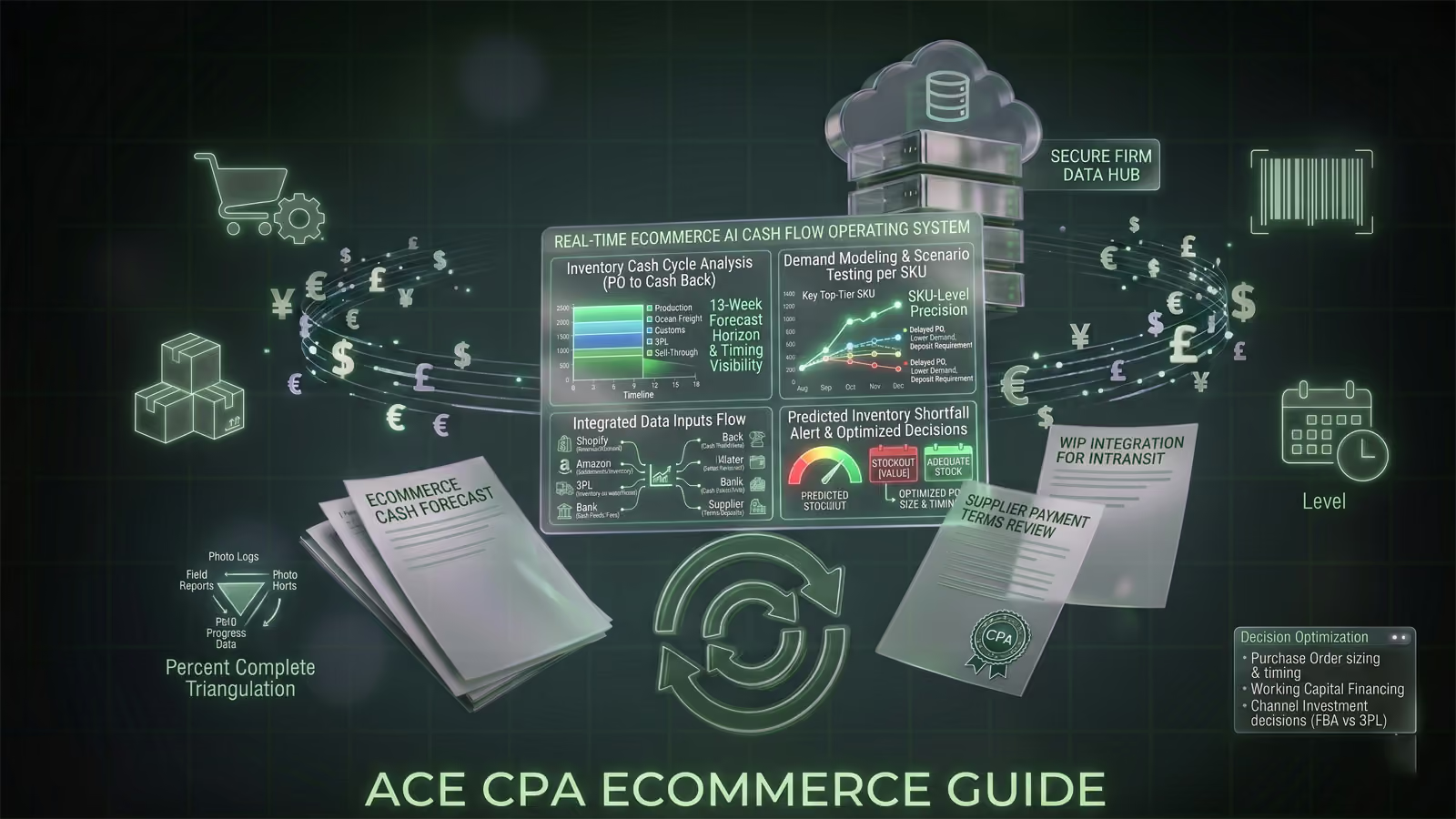
Many business owners assume that if their company is profitable, it should naturally be financially healthy. Yet, countless businesses that report strong profits still face serious financial stress, delayed payments, and even shutdowns. The reason lies in a critical misunderstanding of profit vs cash flow.
At Ace CPAs, one principle stands above all: cash flow is not just important, it drives the survival of your business. In fact, as highlighted on their platform, “cash flow isn't just king, it's the entire kingdom.”
This blog will break down why profitable businesses still struggle, how cash flow management for small businesses plays a vital role, and what you can do to fix it.
Before diving deeper, it is important to clearly understand the difference.
Profit is what remains after subtracting all expenses from your revenue. It appears on your income statement and reflects your business performance over a period.
There are different types of profit:
Profit shows whether your business model works.
Cash flow refers to the actual movement of money in and out of your business. It determines whether you can:
Cash flow is tracked in your cash flow statement, not your profit and loss statement.
A business can show a profit on paper but still run out of cash in reality.
This is why understanding profit vs cash flow is essential for long term sustainability.
Many business owners are surprised when they experience business cash flow issues despite strong profits. Here are the most common reasons.
One of the biggest causes of cash flow problems is delayed payments.
For example:
On paper, you are profitable. In reality, you may struggle to pay expenses during those 60 days.
This is especially common in industries like construction, SaaS, and e-commerce, where payment cycles can be long and complex.
Working capital management refers to how you manage short term assets and liabilities.
This includes:
If not handled properly, even profitable businesses can run into liquidity problems.
For example:
All of these create pressure on your cash reserves.
Growth is exciting, but it often consumes more cash than expected.
When your business grows, you may need to:
Even if profits are increasing, the upfront cash required for growth can create a gap.
This is why many growing companies face cash flow challenges despite strong financial performance.
Many businesses fail because they do not have real time insights into their finances.
Without proper bookkeeping and reporting:
This is where professional financial guidance becomes critical. Firms like Ace CPAs emphasize accurate reporting, dashboards, and forecasting to give businesses full visibility into their financial health.
5. High Profit but Low Margins in Cash Terms
Sometimes, businesses appear profitable but operate on tight margins.
For example:
In such cases, even a small delay in cash inflow can cause serious disruptions.
Loans, leases, and fixed monthly expenses can drain cash quickly.
Even if your business is profitable:
This creates pressure on your liquidity.
Manual processes, outdated tools, or lack of automation can lead to:
Modern accounting solutions and automation can significantly improve cash flow management.
Effective cash flow management for small businesses is not optional. It is essential.
Here is why it matters:
Profit shows potential. Cash flow ensures survival.
Without cash, your business cannot operate, regardless of profitability.
When you understand your cash position, you can:
Consistent cash flow helps you:
With proper cash flow planning, you can grow sustainably without running into liquidity issues.
If your business is profitable but struggling financially, here are actionable steps to improve your situation.
Cash flow forecasting allows you to predict future inflows and outflows.
This helps you:
At Ace CPAs, cash flow forecasting is a core part of helping businesses make smarter financial decisions.
Speed up customer payments by:
Do not rush to pay vendors immediately unless necessary.
Instead:
Excess inventory ties up cash.
Focus on:
A cash buffer helps you handle:
Modern accounting tools can:
Ace CPAs leverages advanced technology and automation to ensure accurate financial data and smoother operations.
Managing cash flow is complex, especially as your business grows.
Professional accountants and fractional CFOs can:
Many businesses struggle with cash flow until they implement proper systems.
According to client experiences shared by Ace CPAs:
This highlights how the right financial strategy can transform your business.
Understanding the difference between profit vs cash flow is one of the most important lessons for any business owner.
Profit tells you if your business is working.
Cash flow determines if your business survives.
Without proper working capital management, even profitable businesses can fail.
The key is to:
If you are facing business cash flow issues or want to strengthen your financial foundation, it is time to take action.
Visit Ace CPAs to explore expert bookkeeping, accounting, and cash flow management solutions tailored for your business.
Book a free consultation directly here and get clarity on your finances:
Book a free consultation
Take the first step toward financial control, better decisions, and sustainable growth.

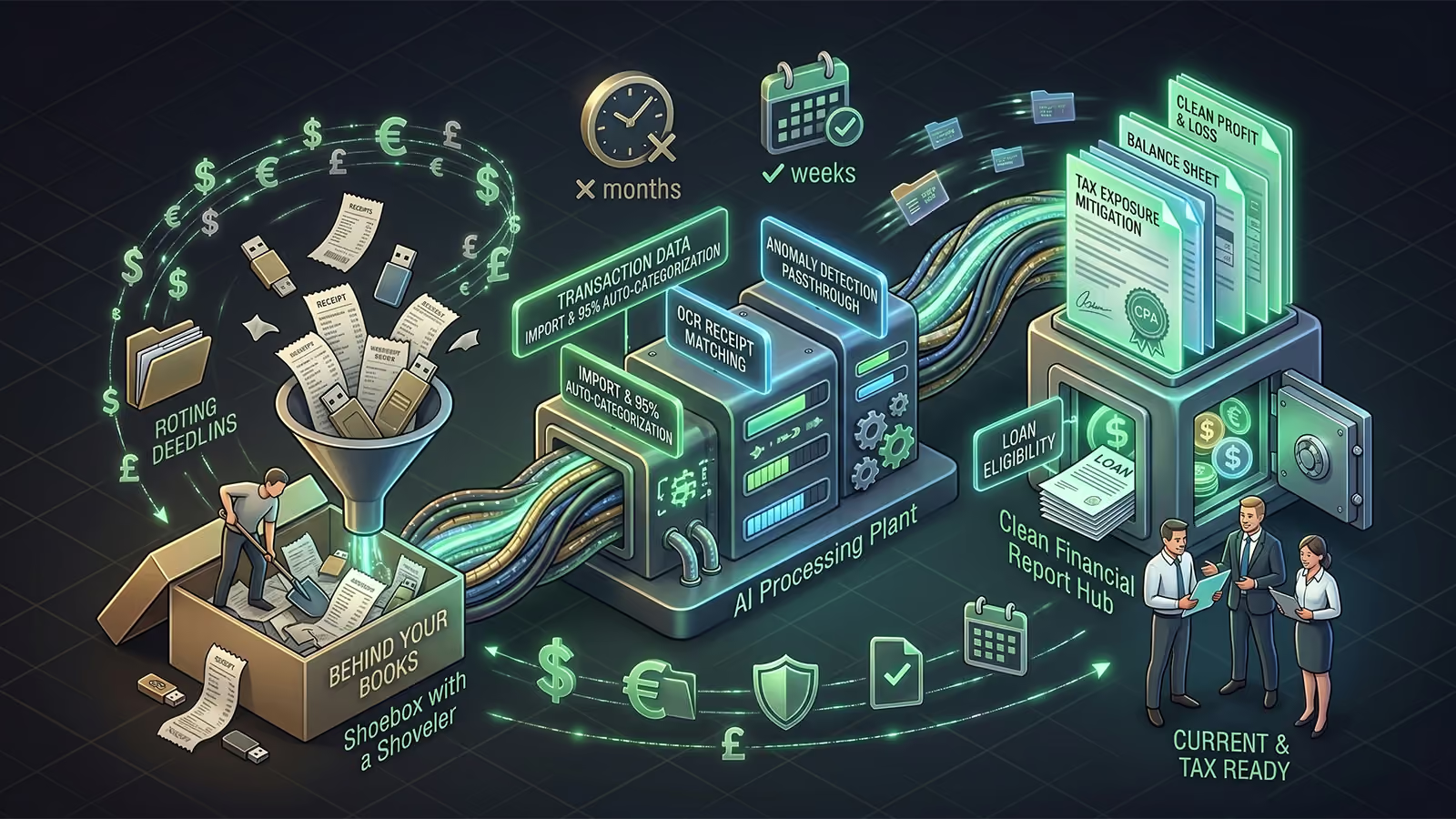
Thirty minutes with a licensed CPA. We go through what you have and tell you the first thing we would change, whether or not you engage us.


.avif)
.png)
.png)

.avif)
